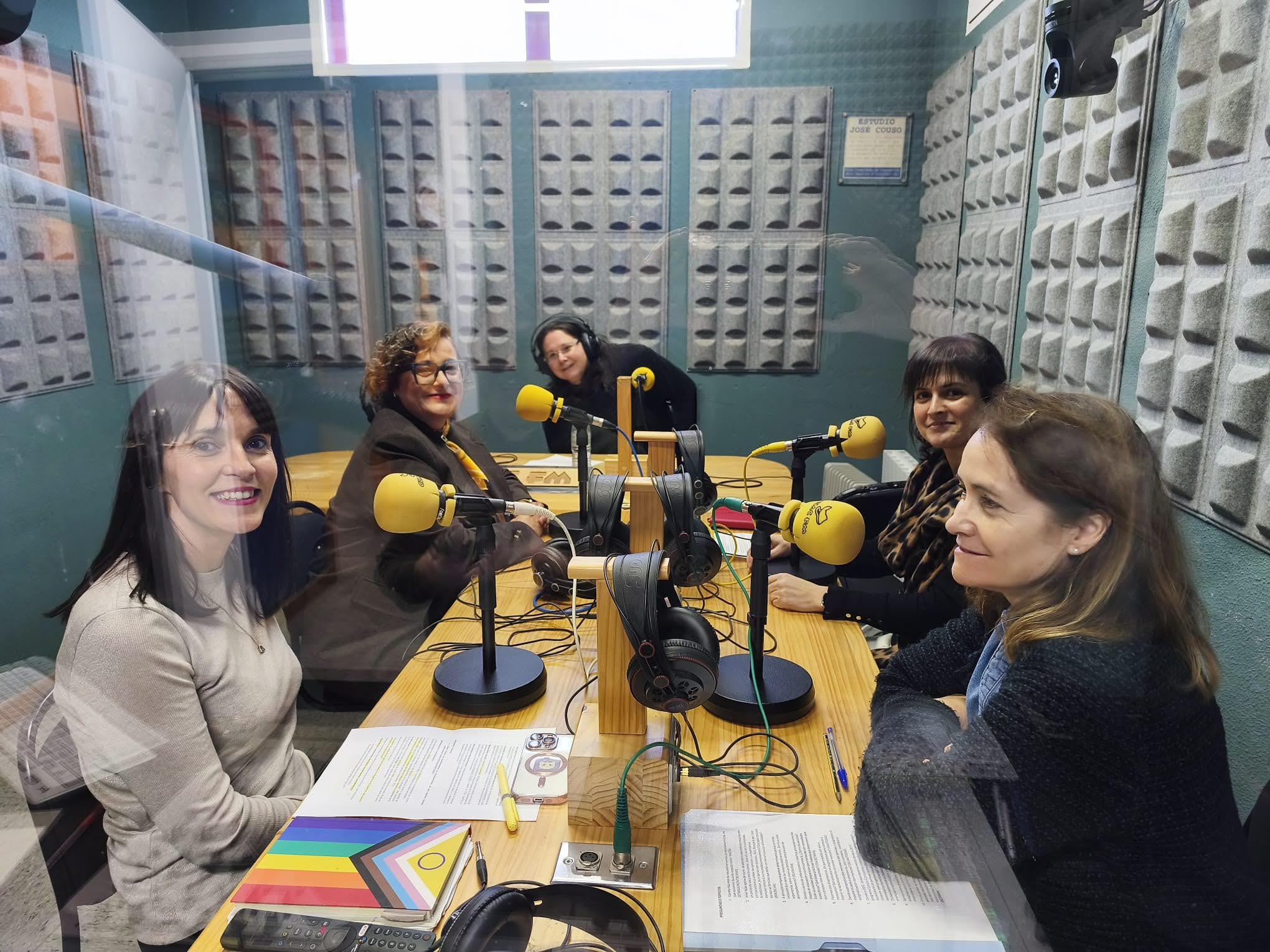
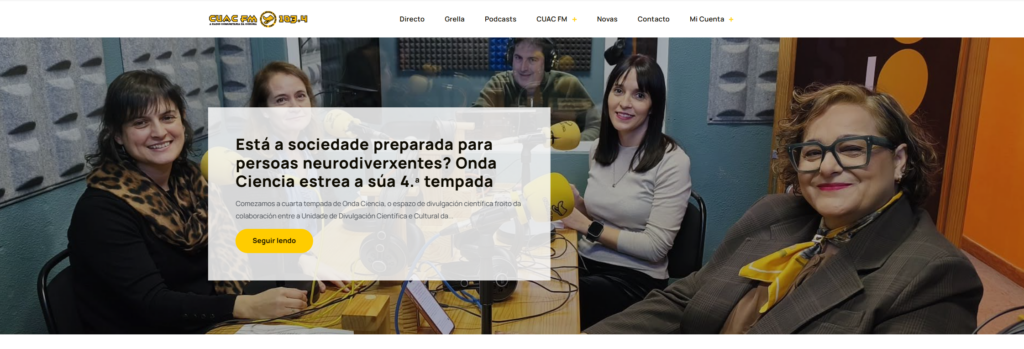
On Tuesday, February 10, the 4th season of ONDA CIENCIA premiered, a radio and podcast project by the Universidade da Coruña (UDC) in collaboration with CUAC FM. The first episode of this season is titled: Is society prepared for neurodivergent people?
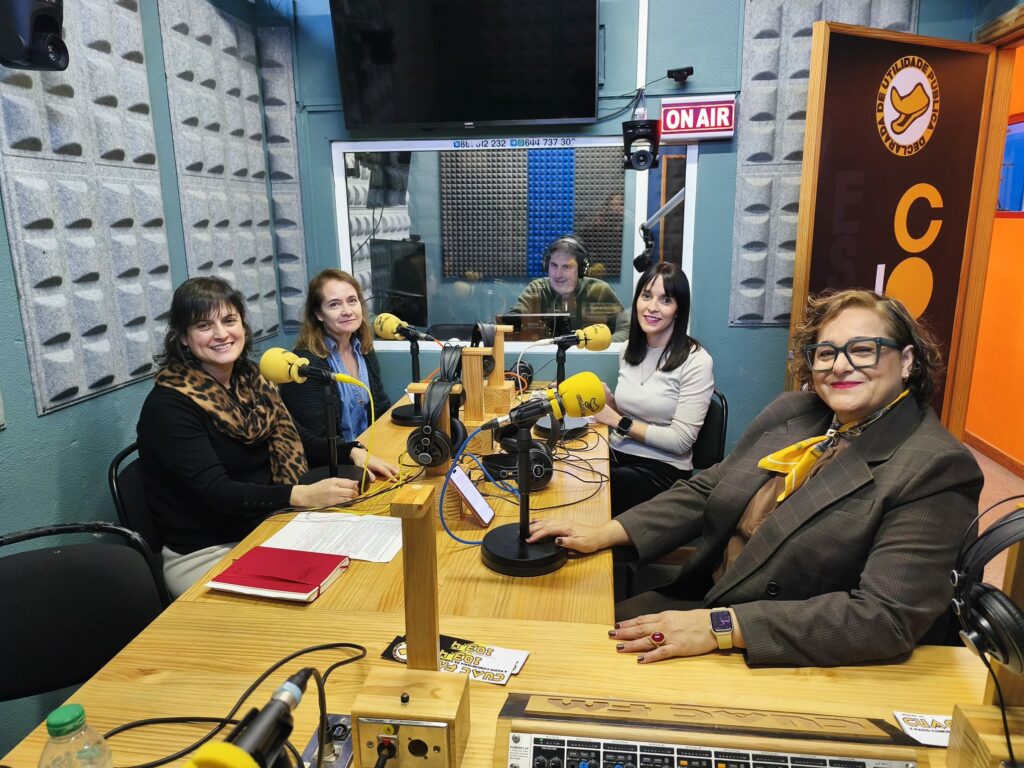
Our colleague Betania Groba González participated in the program alongside Silvia López Larrosa, Iria Botana Lois, and Montserrat Muriano Rodríguez.
The central theme of the program was neurodiversity. This is a complex concept that even stands as a philosophical position, understanding that human brains function differently and that these differences are not necessarily “diseases that must be cured.” As explained in the program, this concept was coined by sociologist and activist Judy Singer in the 1990s, who, being an autistic woman herself, wanted to approach this phenomenon from a different perspective (Singer, 2017).
Throughout the episode, the participants discussed how neurotypical and neurodivergent people coexist in daily life and the challenges faced by individuals, their families, and the professionals who support them. Inclusive education is a right, and the participants shared impressions and best educational practices that focus on this right from early childhood to adulthood. One of the recommended best practices in this episode relates to the movement “Inclusive Education: To Want It is to Create It” (Quererla es crearla). This movement began by listening to children—not only those with health conditions or disabilities but all those who have been excluded from school (children in situations of exclusion, migrants, or those belonging to minorities). From there, they have built a network that includes these children, adolescents, and young people, as well as professionals, teachers, and families, to propose changes in education.
Furthermore, Betania Groba, as a researcher at CITIC, addressed the research carried out by the center, which focuses on the design and development of technologies for all people. The technological solutions designed and developed can make the difference between being able to participate in daily life or not.
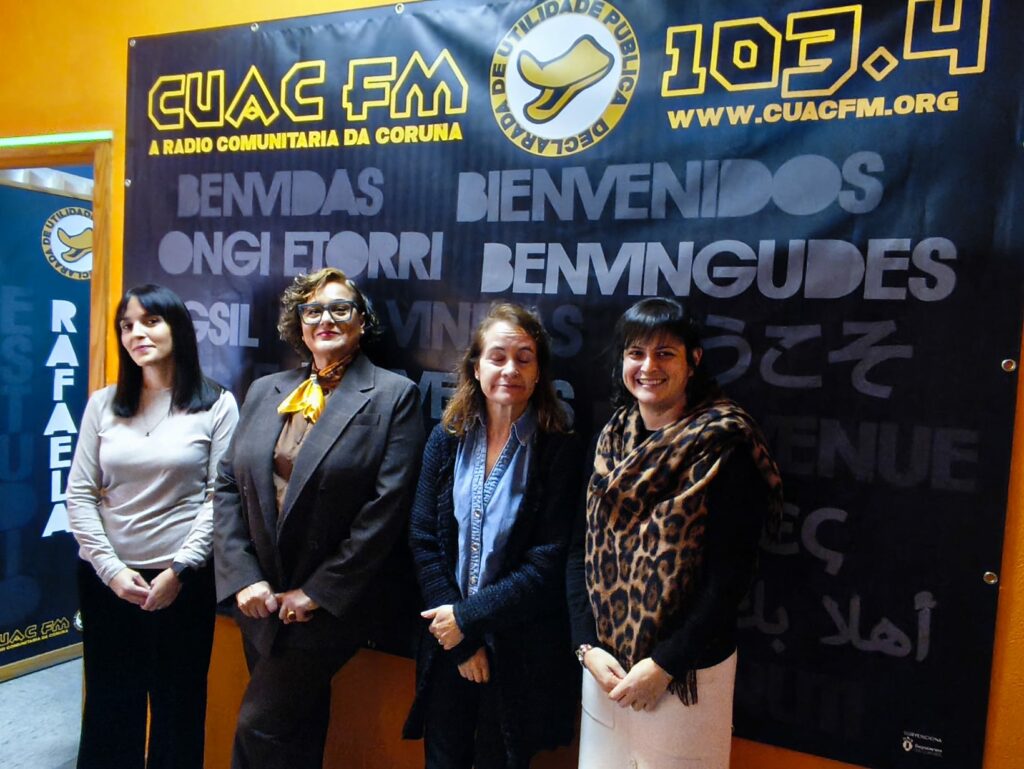
The conclusions show that the four researchers agree that more collaboration and understanding are needed. On the one hand, it is essential to collaborate and disseminate the projects and initiatives in which they are participating, so that everyone can access new opportunities (such as our Design2Freedom project); on the other hand, a deeper understanding of the differences is required. This will allow us to be more professional and more human.
The program can be accessed (in Spanish and Galician) at https://cuacfm.org/radioco/programmes/onda-ciencia/4×1/ or on CUAC FM’s channels (YouTube, Spotify, Acast, or iVoox).
References:
CUAC FM. https://cuacfm.org/radioco/programmes/onda-ciencia/4×1/
Donna Williams. (1991). Nobody Nowhere. The Remarkable Autobiogrphy of an Autistic Girl.
Judy Singer. (2017). NeuroDiversity: The Birth of an Idea.
Quererla es crearla. https://creemoseducacioninclusiva.com/